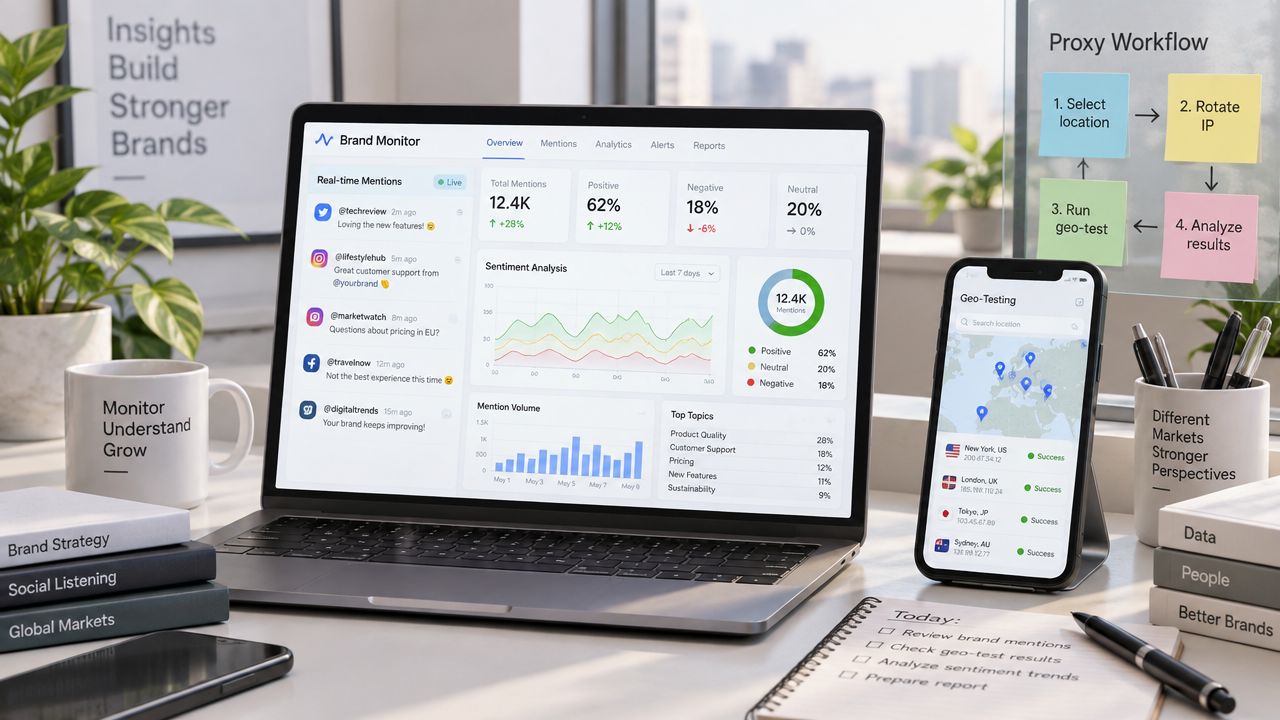
A launch can create noise faster than a team can interpret it. Mentions appear across social networks, news sites, reviews, forums, podcasts, and search results, while a social media manager needs to answer customers, a PR lead needs to catch reputation risks, and a data team needs clean records rather than another stream of irrelevant alerts.
Brand monitoring is the structured tracking of brand mentions, sentiment, competitors, and reputation across public digital channels. The right platform doesn't merely count mentions. It helps your team decide which conversations matter, who owns the response, and whether the signal should change marketing, product, customer experience, or paid media activity.
The ten brand monitoring tools below suit different jobs. Brandwatch and Talkwalker target complex enterprise intelligence, Mention and Awario favor practical monitoring, Semrush connects mentions with SEO, and Hootsuite Insights, Sprout Social, and Socialbakers fit publishing-led social teams. Meltwater is particularly relevant to PR, while Digimind is built for consumer and market intelligence. Pricing tiers, source coverage, API access, and capabilities can change, so verify current terms before purchase.
1. Brandwatch
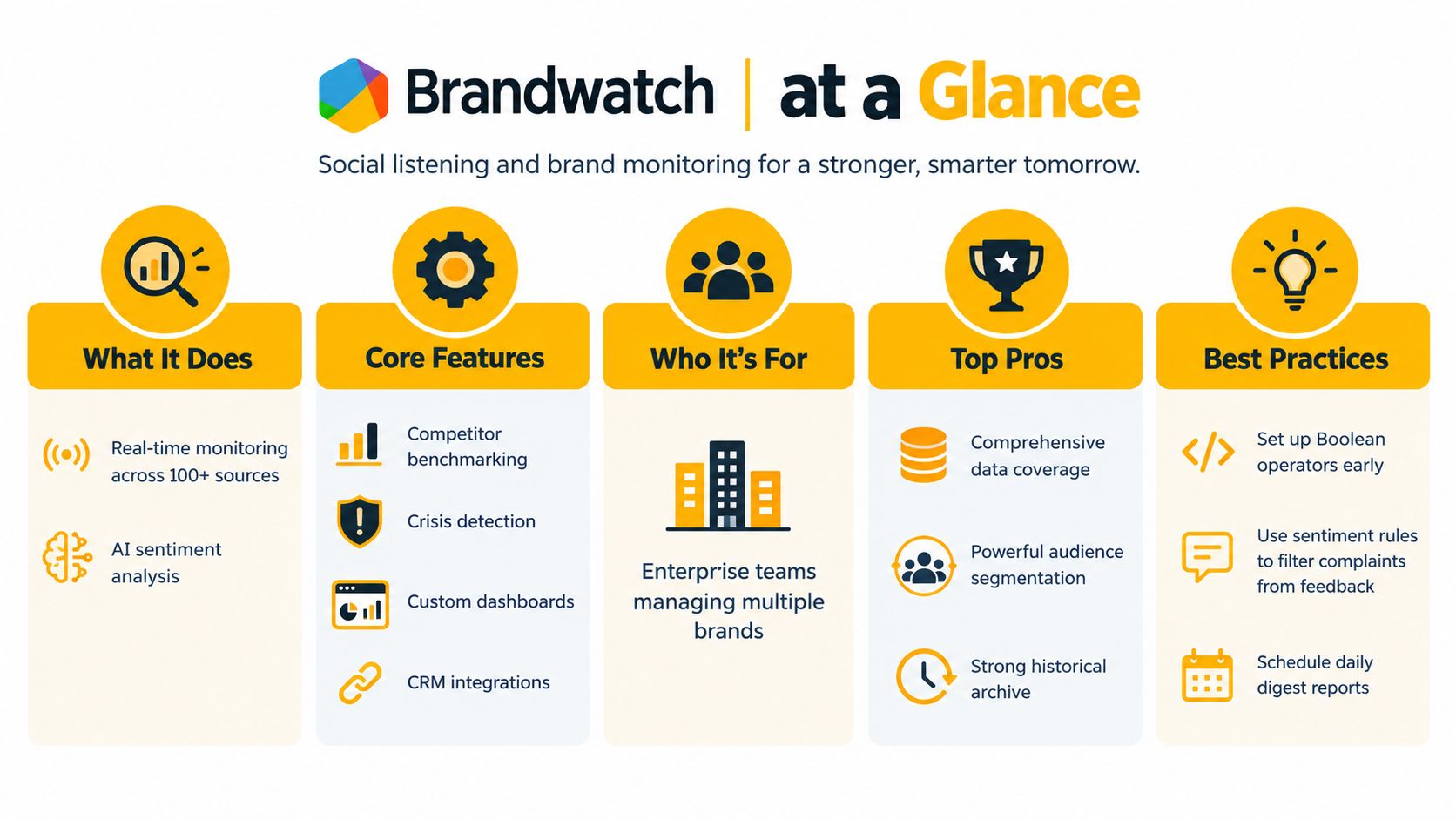
Brandwatch is designed for teams that need enterprise-scale social listening rather than a simple keyword alert. It brings together conversations from social media, news, blogs, forums, and review sites, then applies natural language processing to help classify mentions, sentiment, and emerging topics.
That breadth matters during a multi-market launch or a fast-moving reputation issue. A global consumer brand may need to compare product perception across regions, a PR agency may need to monitor journalist and influencer discussion for several clients, and a retail organization may want local reputation signals alongside national coverage. Brandwatch's dashboards are useful when analysts need to turn large volumes of conversation into campaign, competitor, and crisis views.
Where Brandwatch earns its complexity
The platform's strength is its ability to support multiple brands, markets, and stakeholder groups in one environment. Boolean search operators should be part of the initial setup, especially when a brand name is also a common word. Build exclusions for unrelated meanings, product categories, and recurring spam before inviting executives into the dashboard.
Sentiment rules also deserve human review. Automated classification can help sort volume, but sarcasm, cultural context, and customer-service language can distort a simple positive or negative label. Use sentiment analysis data as a starting point for investigation, not as an unquestionable reputation score.
Practical rule: Send a concise daily digest to stakeholders, then reserve real-time escalation for issues with a clear owner and response path.
Brandwatch is a strong fit for organizations with analysts, multiple markets, and a defined escalation process. It won't be the most efficient choice for a small team that only needs a few reliable alerts.
2. Mention
Mention is built for teams that want to create monitoring queries quickly and route alerts into an existing collaboration workflow. It tracks brand terms, keywords, competitors, and public conversations across the open web, social media, news outlets, and blogs.
Its lighter interface suits mid-market businesses and social media agencies that don't have a dedicated analyst for every account. A startup can use it during a product launch to identify early customer reactions. An agency can separate client projects and permissions, while a crisis team can use email, Slack, or webhook alerts to trigger a defined internal workflow.
Make the alert stream usable
The best setup separates brand monitoring from competitor tracking. Use one keyword group for the company, product names, common misspellings, and campaign language. Use another for competitors and category terms. That separation makes reports easier to interpret and prevents a competitor's spike from appearing to be a change in your own reputation.
Exclusion lists are equally important for high-volume terms. Filter unrelated names, generic dictionary meanings, job listings, and recurring sources that don't produce actionable discussion. Slack channels should reflect how people work, not how the vendor organizes its interface.
- Create brand-specific channels: Keep urgent reputation signals away from routine competitor alerts.
- Use webhooks selectively: Trigger downstream workflows only for defined conditions, such as a product issue or high-priority outlet.
- Review noisy queries weekly: Search quality declines when campaigns, slang, or product contexts change.
Mention is a sensible choice when speed of setup and team accessibility matter more than deep analyst tooling. Test review-site and niche-community coverage against your actual brand before committing, because broad channel labels don't guarantee equal depth everywhere.
3. Semrush
Semrush makes the most sense when brand monitoring needs to sit beside SEO, PPC, content, and competitive research. Its monitoring functions can track brand mentions, brand keywords, and backlinks, giving growth teams a way to connect external discussion with search visibility and link opportunities.
An affiliate team might investigate where competitors are mentioned and whether those pages link to them. A PPC specialist could look for possible trademark misuse in search advertising. A content strategist can compare rising brand topics with organic rankings and decide whether a useful discussion deserves a dedicated guide, comparison page, or digital PR response.
Connect mentions to search actions
Semrush is less compelling as a standalone reputation command center than as part of an SEO-led workflow. Start by tracking the brand name, product variants, and terms associated with customer problems. Then compare mention trends with branded keyword rankings, referring domains, and the pages receiving attention.
Unlinked mentions are particularly valuable for outreach. They aren't automatically link opportunities, but they can identify publishers who already understand the product. Ask whether a citation would improve the reader's experience, and use a normal outreach process rather than treating every mention as a demand for a backlink.

The API and export options matter for teams managing several brands or feeding data into internal dashboards. Before buying, confirm which monitoring data is available at your tier and how often it updates. Semrush works best when an SEO or growth team already owns the surrounding workflow. If the primary need is social care or crisis response, a specialist listening platform may offer a better operational fit.
4. Hootsuite Insights
Hootsuite Insights fits teams that already use Hootsuite to schedule, approve, and publish social content. It extends that publishing environment with monitoring for mentions, hashtags, conversations, sentiment, and audience characteristics across supported social networks.
That integration reduces context switching for social media managers. An agency can watch client campaign conversations while managing the content calendar. A retail brand can organize product-hashtag monitoring alongside community replies. An event team can create a board for launch or conference discussion and keep publishing and listening in the same operating rhythm.
Use boards to control attention
Create separate boards for each campaign, product, or market. A single board containing every hashtag and competitor query quickly becomes an alert-fatigue machine. Assign high-priority mentions to the community team only when the rule reflects a real response obligation, such as a customer question, product complaint, or potential escalation.
Demographic filters can help explain who is engaging, but they shouldn't replace qualitative reading. A dashboard may show an audience segment becoming more active without explaining whether the discussion reflects enthusiasm, confusion, or criticism. Open the underlying posts before changing creative or messaging.
Hootsuite Insights is strongest when the team values publishing plus monitoring over maximum source breadth. Confirm the current listening package, network availability, historical access, and export rules before purchase. Teams that need news, forums, podcasts, or broad web intelligence may need a second data source rather than assuming a social publishing suite covers every reputation channel.
5. Talkwalker
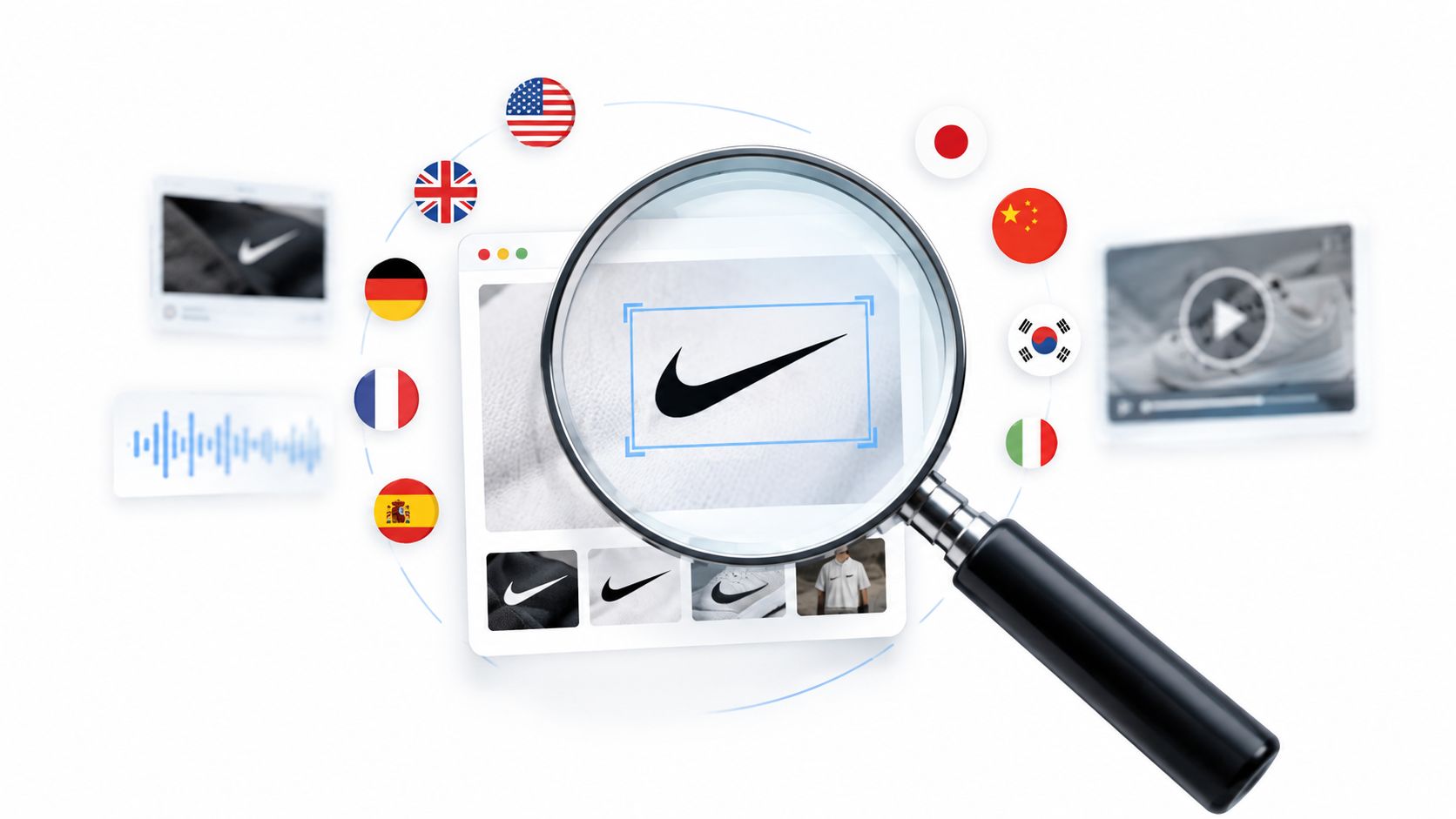
Talkwalker is aimed at global brands and agencies that need social intelligence across many languages and media formats. Its monitoring scope includes social media, news, blogs, videos, podcasts, and the wider web, while machine learning helps interpret context, emotion, and intent beyond exact keyword matching.
The visual intelligence capability is useful for brands whose reputation appears in images or video without a written brand mention. A luxury business can investigate unauthorized logo use, a consumer brand can study visual product presence, and an entertainment company can follow discussion embedded in video and podcast content.
Treat AI as an analyst assistant
Custom terminology should be added early. Product nicknames, technical language, campaign phrases, and regional expressions can all affect relevance. A model trained on generic language may classify a specialist complaint incorrectly, particularly where a phrase has different meanings in different markets.
Talkwalker can support influencer discovery and audience analysis, but scores still need commercial judgment. A large audience doesn't necessarily mean the creator reaches the right market or produces trustworthy engagement. Validate partnership candidates against content quality, audience fit, disclosure practices, and brand-safety requirements.
AI can reduce sorting effort, but it can't remove the need for sampling and human review.
The platform suits enterprises with international coverage requirements and enough operational maturity to maintain taxonomies, dashboards, and escalation policies. Teams buying it for a single market should first prove that the broader source and language coverage will change decisions. Otherwise, the implementation burden may exceed the value of additional intelligence.
For organizations combining listening with compliant publishing processes, documented social media automation tools should support permissions, rate limits, auditability, and platform rules. Monitoring coverage doesn't grant permission to automate every action.
6. Sprout Social
Sprout Social combines publishing, engagement, listening, and reporting for mid-market and enterprise social teams. Its main advantage is workflow governance. Approval paths, team permissions, training, and shared inbox processes help organizations maintain a consistent response across many contributors.
That makes it relevant to regulated industries, large retail teams, and B2B businesses where a social mention may need to connect with a customer record or sales process. A financial services team can require review before publication. A SaaS company can associate a public conversation with an account in its CRM, while a retail organization can compare regional sentiment with campaign performance.
Buy it for the operating model
Sprout Social is a strong choice when the team needs one place to publish, engage, and listen. It is less attractive when the core requirement is exhaustive monitoring across forums, podcasts, developer communities, or less visible web sources. Always test the actual sources that matter to your customers rather than judging coverage from a feature list.
Approval workflows should be configured before a major campaign begins. Define who can acknowledge a complaint, who can provide product facts, and who can escalate a potential legal or safety issue. This avoids a common failure mode, where the tool records a problem but nobody knows whether marketing, CX, product, or legal owns the next step.
- Map permissions to responsibility: Don't give every user the same publishing or export access.
- Connect customer context carefully: Use CRM data only under appropriate privacy and access controls.
- Train responders on sentiment limits: A negative classification is a prompt to inspect the conversation, not an automatic reply instruction.
Sprout Social earns its place when governance and collaboration matter as much as listening depth. If your team already operates there, the incremental workflow value may be substantial. If not, compare its listening coverage with a dedicated monitoring platform before consolidating everything.
7. Meltwater
Meltwater is a natural fit for PR and corporate communications teams that need earned media and social discussion in one monitoring environment. It brings news, online publications, blogs, podcasts, and social sources together so communicators can assess whether a story is confined to a niche community or spreading into mainstream coverage.
A communications department can build journalist lists before a launch, monitor campaign pickup, and track crisis signals across news and social channels at the same time. Agencies can prepare recurring media briefings for clients, while regulated organizations can create escalation rules around sensitive topics.
Make escalation operational
Alert design should reflect the decisions leadership expects. A generic alert for every brand mention creates inbox fatigue. A focused alert for a product safety term, executive name, or fast-moving incident can prompt a timely review. Assign each alert category to a person or team, and document what happens after receipt.
Meltwater is more valuable when communications staff use the output to brief stakeholders, shape outreach, and coordinate responses. It isn't a substitute for a customer-service queue or a product incident system. Keep those systems connected through approved exports, email workflows, or integrations, and retain the original mention context for verification.
A daily media briefing can include top coverage, changing themes, notable sources, competitor context, and unresolved issues. Don't reduce the briefing to volume alone. A small number of authoritative articles may matter more than a large number of low-reach reposts.
For agencies managing multiple accounts, a clear social media management workflow helps separate listening, approval, publishing, and reporting responsibilities. Meltwater is best for communications teams that value media intelligence and executive reporting. A social-first team may find its broader PR orientation unnecessary.
8. Awario
Awario is a practical option for small and mid-market teams that need monitoring without an enterprise implementation. It follows mentions across social media, news, blogs, forums, and the broader web, with sentiment and topic categorization to help organize the results.
Its audience includes e-commerce businesses, resellers, freelancers, and agencies. A store can monitor product names and customer discussion. A market researcher can watch competitor terms and category language. An affiliate marketer can look for emerging conversations that deserve a content or campaign response.
Keep projects narrowly scoped
Separate projects by brand, product, or campaign. A single project containing every competitor, category phrase, and product variant makes it difficult to understand why an alert arrived. Use exclusions for generic language and unrelated industries, then inspect a sample of results before trusting the dashboard.
Webhooks are useful when they pass a carefully defined event into Slack or a CRM. They become counterproductive when every keyword match creates a new message. Start with one workflow for high-priority mentions, test it with real data, and add more automation only after someone can explain what action each alert should trigger.
Awario's appeal is operational simplicity and cost control, not the deepest possible intelligence layer. Verify the platforms, historical data, update cadence, and API availability that your process requires. It can be a good first paid tool for a small team, but organizations with complex multilingual analysis, visual recognition, or executive-grade media intelligence should evaluate a larger platform.
For competitor monitoring, focus on observable customer and market signals rather than copying another company's private data or bypassing access controls. Responsible monitoring combines public-source collection, clear query logic, and a documented reason for every tracked term.
9. Digimind
Digimind combines brand monitoring with consumer intelligence and competitive research. It monitors social media, news, reviews, forums, and retail platforms, giving product and strategy teams a broader view of how customers discuss a category, not just how they react to a campaign.
That difference changes the questions a team can ask. A product group can investigate emerging needs before a roadmap review. A retail team can examine price discussion and review language together. A brand strategist can compare consumer themes with campaign performance and use the findings to refine positioning.
Look beyond sentiment
Sentiment is only one layer of consumer intelligence. Track the subjects attached to positive and negative discussion, the features people compare, the reasons they switch, and the language they use when describing alternatives. Topic shifts can be more useful than a single aggregate score because they suggest what product or messaging decision deserves attention.
Trend forecasting should inform human planning rather than dictate it. A rising conversation may reflect a short-lived news cycle, a concentrated community, or an actual change in customer demand. Review the source mix, geographic relevance, and commercial context before placing it on a roadmap.
Custom segments can help teams compare audiences by needs, behaviors, or attitudes, but avoid collecting more personal information than the use case requires. Access controls, retention rules, and a clear legal basis matter when research touches identifiable customer data.
Digimind is a strong candidate for market researchers, product teams, and category strategists. It may be more than a small business needs for basic mention alerts. Choose it when the output must influence product planning, consumer segmentation, or competitive decisions, not merely notify a community manager that a brand name appeared.
10. Socialbakers
Socialbakers is oriented toward social media managers, agencies, and brand teams that want publishing, community management, analytics, and listening in one environment. Its value comes from connecting what people say with what happens to engagement, reach, and audience growth.
A fashion brand can compare hashtag discussion with campaign performance. A technology company can monitor competitor announcements alongside customer reaction. An agency can use a unified reporting view to explain how listening changed content choices and response priorities.
Measure the action after the mention
A mention dashboard is only useful if the team can connect it to a decision. Configure competitor views around comparable campaigns, products, or audience groups rather than collecting every available metric. Then review whether a sentiment shift corresponds with changes in engagement, response time, content performance, or customer questions.
Automated content recommendations can accelerate ideation, but editors still need to check accuracy, originality, brand fit, and audience sensitivity. A topic that performs well for a competitor may not suit your positioning or customer expectations. Keep recommendations inside the approval process instead of publishing them automatically.
- Build competitor dashboards: Compare relevant content and audience signals, not vanity totals.
- Annotate campaigns: Record launch dates, creative changes, and incidents so trend reviews have context.
- Show the response loop: Report which mentions informed content, community replies, or product feedback.
Socialbakers is most useful for teams already measuring social performance as part of a broader content operation. If your primary need is news, reviews, podcasts, or open-web research, validate source coverage before treating it as a complete brand monitoring system. Its strength is the relationship between conversation and social execution.
Top 10 Brand Monitoring Tools Comparison
| Tool | Core features ✨ | UX & Quality ★ | Price / Value 💰 | Best for 👥 | Standout 🏆 |
|---|---|---|---|---|---|
| Brandwatch | Real-time 100+ sources, AI sentiment, custom dashboards ✨ | ★★★★★ | 💰 High, enterprise ROI | 👥 Enterprise brand teams, large agencies | 🏆 Deep cross-channel coverage & historical archive |
| Mention | Instant alerts, Boolean search, Slack/webhook integration ✨ | ★★★★ | 💰 Affordable / mid-market | 👥 SMM agencies, mid-market teams, startups | 🏆 Fast setup & Slack-first alerts |
| Semrush | Brand mentions + backlinks + SEO/PPC correlation ✨ | ★★★★ | 💰 Mid–High (bundled value) | 👥 Growth marketers, SEO & PPC teams | 🏆 Integrates brand monitoring with SEO insights |
| Hootsuite Insights | Social mentions, sentiment, audience demographics; native publishing link ✨ | ★★★★ | 💰 Mid, good for multi-account agencies | 👥 Social media managers using Hootsuite | 🏆 Seamless publishing + listening workflow |
| Talkwalker | Multilingual AI, image & video recognition, custom models ✨ | ★★★★★ | 💰 Premium enterprise | 👥 Global brands & large agencies | 🏆 Best-in-class visual tracking & contextual AI |
| Sprout Social | Unified inbox, listening, approval workflows, CRM links ✨ | ★★★★ | 💰 Mid–High | 👥 Mid-market → enterprise teams needing governance | 🏆 Strong team workflows & CRM integration |
| Meltwater | News + social + broadcast monitoring, journalist database ✨ | ★★★★★ | 💰 Premium, costly for small orgs | 👥 PR, corporate comms, regulated industries | 🏆 Unmatched earned-media & journalist outreach |
| Awario | Web-wide mentions, real-time alerts, webhook exports ✨ | ★★★ | 💰 Budget-friendly | 👥 SMBs, freelancers, e‑commerce sellers | 🏆 Cost-effective, quick-to-deploy monitoring |
| Digimind | Omnichannel monitoring, trend forecasting, retail insights ✨ | ★★★★ | 💰 High, for advanced analytics | 👥 Product teams, market researchers, strategists | 🏆 Trend forecasting & category benchmarking |
| Socialbakers | Listening + deep social analytics, content recommendations ✨ | ★★★★ | 💰 Mid–High | 👥 Social managers, agencies, brand teams | 🏆 Correlates sentiment with engagement KPIs |
Turn Brand Signals Into a Repeatable Workflow
The best brand monitoring tool isn't the one with the longest feature list. Choose according to source coverage, team size, alert urgency, workflow ownership, export needs, and budget. A PR department may prioritize news and journalist intelligence. A social team may need publishing and community response in one interface. An SEO team may care more about unlinked mentions and search context. A product group may need reviews, forums, retail signals, and topic trends.
Market forecasts show why buyers should evaluate the category as a changing technology market. One estimate places brand monitoring tools at USD 0.68 billion in 2024 and projects USD 1.51 billion by 2033, with a 9.1% compound annual growth rate from 2025 to 2033. A separate estimate gives USD 627.33 million in 2024, USD 746.71 million in 2026, and USD 1.64401 billion by 2035, also projecting a 9.1% CAGR. These figures are forecasts, not guarantees, and the difference between estimates reinforces the need to validate current capabilities directly with vendors. Business Research Insights reports both projections.
A directory tracked 25 brand monitoring tools, with an average rating of 4.33 out of 5 across 15 rated tools and 9,008 aggregated reviews. It also found that only 2 of the 25 tools offered a free tier, which suggests that many products are positioned as paid solutions rather than lightweight utilities. Brand24's tool guide provides that directory context. Treat ratings as a discovery signal, not proof that a platform covers your important sources.
Build the process before adding automation
Start with a query map. Include the exact brand name, product names, abbreviations, misspellings, executive names, campaign terms, competitor names, and category language. Add exclusions for unrelated meanings and persistent noise. Run the queries against real results, then refine them before setting executive alerts.
Classify mentions into operational groups:
- Customer support: Questions, complaints, delivery issues, and requests that need a service owner.
- Reputation risk: Safety, legal, privacy, fraud, or high-visibility criticism that requires escalation.
- Growth intelligence: Customer needs, competitor comparisons, influencer opportunities, and content themes.
- Measurement: Volume, sentiment, share of voice, reach, engagement, and recurring topic movement.
Sentiment analysis can accelerate triage, but it breaks down in sarcasm, multilingual language, cultural context, private communities, and changing platform environments. Recent guidance also warns that traditional alerting may miss newer AI-generated responses and channels outside standard social monitoring. Brandwatch explains the shift from simple monitoring to broader listening, while Radaar discusses the measurement and context limitations. Sample classified mentions manually, record false positives, and use those findings to improve rules.
Use proxies for controlled access, not missing coverage
Proxies can support legitimate geo-testing, ad verification, market research, price checks, SEO validation, and QA workflows. They don't expand a monitoring vendor's data sources, and they shouldn't be used to bypass authentication controls, platform restrictions, privacy safeguards, or Terms of Service.
A datacenter proxy usually comes from hosting infrastructure. It can be fast and predictable, but its network ownership is often easier to identify. A residential proxy uses an IP associated with a residential internet connection. A mobile proxy exits through a carrier's 4G or 5G network, which can make it useful for testing experiences that vary by mobile geography or carrier environment.
Mobile addresses are harder to block as a class because carriers commonly use carrier-grade NAT, or CGNAT. In that model, many subscribers can share a public IP, and the shared address space defined by RFC 6598 includes 100.64.0.0/10. Blocking one address can therefore affect legitimate users, which is why defenders often evaluate more than the IP alone. Coronium explains the distinction between residential, datacenter, and mobile proxies.
IP rotation changes the exit address on a schedule or after a request. It can help compare regional results or reduce overreliance on one network identity during an approved collection task. A sticky session keeps the same IP for a defined period, which is better for QA flows involving login state, carts, dashboards, or multi-step navigation. Rotation and stickiness solve different problems, so select based on session continuity versus fresh location signals. This proxy session guidance explains the distinction.
An ASN, or Autonomous System Number, identifies the network that announces a group of IP prefixes. Checking ASN and carrier information helps ad verification and regional QA teams confirm that a result comes from the intended network type. Geo-targeting should be specific enough to reproduce the user experience you need, such as a country, city, carrier, or mobile network, but it must respect the permissions and policies attached to the destination.
HTTP and SOCKS5 are proxy protocols, not proxy quality labels. HTTP proxies are common for web requests and can handle HTTP-aware behavior. SOCKS5 works at a lower connection level and can support a wider range of applications, but your client still needs correct DNS, authentication, timeout, and TLS handling. Test the full workflow, not just whether an IP lookup returns the expected country.
For brand monitoring, use proxies as a controlled layer around approved checks. Keep request rates reasonable, identify your team where required, cache results, honor robots and access policies where applicable, and avoid creating fake engagement or evading platform enforcement. A monitoring tool should remain the source of truth for coverage and classification. Proxies should support regional validation, ad visibility checks, and reliable QA, not compensate for weak queries or incomplete data.
The market for adjacent social listening tooling also reflects strong expansion, with one report valuing that market at USD 10.37 billion in 2025 and USD 12.15 billion in 2026. The same Business Research Insights source reports those figures. The practical implication is simple. Recheck source access, API terms, update cadence, retention, compliance controls, and export flexibility during each planning cycle instead of assuming today's integration will remain unchanged.
For teams that need controlled French mobile testing, ad verification, market research, SEO checks, or brand-protection workflows, Evoproxy is one option to evaluate at Evoproxy. Match the proxy type and session behavior to the use case, document the purpose, and keep every automated workflow within the destination's rules.
Evoproxy offers mobile 4G/LTE/3G connectivity from France, with personal and shared ports, configurable rotation, and support for geo-dependent QA, ad verification, market research, and monitoring workflows. If your team needs controlled mobile IP testing rather than broader tool coverage, visit Evoproxy and assess whether its session and location options fit your process.


